
Key Takeaways
- Narva-Jõesuu has started construction on a €1.2 million racket-sports center featuring 4 tennis courts and 2 padel courts, primarily funded by the European Union and set to open next summer.
- Narva-Jõesuu tennis club board member Erki Jaanson explained that Soviet-era neglect caused the town’s pre-war tennis scene to vanish, noting: “The same thing happened as in other small towns. It wasn’t a priority sport, nor was it an Olympic sport for a long time, so the Soviet era did its work.”
- Jaanson highlighted the positive dynamic between tennis and padel, stating: “I’m rather glad that a somewhat simpler sport has emerged alongside tennis. It also works the other way — some people reach tennis through padel.”
Reviving racket sports along the Narva-Jõesuu coast
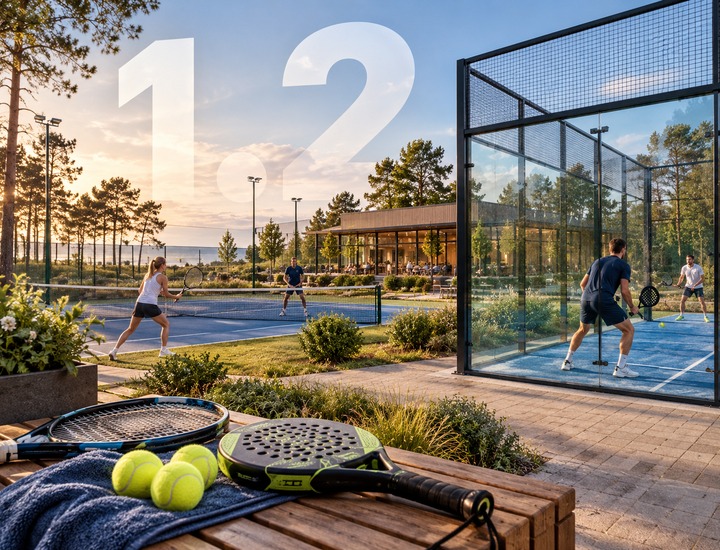
Narva-Jõesuu is preparing to restore its historic place on the Estonian racket-sports map. Construction has begun on a new €1.2 million center near the seaside that will feature 4 tennis courts and 2 padel courts. Scheduled to open by next summer, the venue is being developed at the initiative of the Narva-Jõesuu tennis club, with the bulk of the funding coming from European Union support.
The project aims to provide local residents and holidaymakers with modern athletic facilities while also breathing fresh energy into the resort town’s central area. Narva-Jõesuu holds the longest tennis history in Estonia, dating back 117 years when summer guests from St. Petersburg set up the country’s first tennis club. Although the coastal community boasted 6 tennis courts prior to World War II, the facilities slowly vanished in the ensuing decades.
Comparison table
| Entry | Value |
|---|---|
| 09 | 35 |
| 09 | 15 |
| 08 | 41 |
Overcoming decades of decline
The post-war era proved difficult for the sport in the resort town. Erki Jaanson, a board member of the Narva-Jõesuu tennis club, explained the historical downturn that eventually left the town without any active courts by the end of the 20th century.
“The same thing happened as in other small towns. It wasn’t a priority sport, nor was it an Olympic sport for a long time, so the Soviet era did its work,” Jaanson said.
Now, Narva-Jõesuu stands as one of the final resort towns across Estonia to reintroduce competitive and recreational racket sports on a grand scale. The complex has also been designed with future expansion in mind, leaving enough surrounding space to build additional courts should interest continue to rise.
Meeting growing demand and sharing courts with padel
Turning the project into reality was a prolonged journey. Jaanson noted that the process required more than 10 years to move from an initial concept to active building work, largely because developing at least 4 tennis courts is essential to host proper training camps and sanctioned competitions.
“Everyone I’ve spoken to is eagerly waiting for these courts and promises to come play. One goal is definitely to have a summer base for Kadriorg, where training camps can be held,” said Jaanson, who concurrently serves as the head of the Kadriorg tennis club in Tallinn.
Jaanson pointed out that training facilities across Estonia have faced severe bottlenecks in recent years, but the rapid surge of padel has helped ease that pressure.
“A few years ago, the situation in Viljandi was such that to hold a training camp there, you had to book the courts three years in advance. Things have improved somewhat now because so many padel courts have been added and the player groups overlap a bit. The situation has normalized,” he explained.
Far from viewing the emerging discipline as competition, Jaanson welcomes the complementary relationship between both sports.
“I’m rather glad that a somewhat simpler sport has emerged alongside tennis. It also works the other way — some people reach tennis through padel,” Jaanson said.