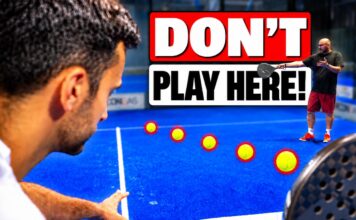

Missing high backhand volleys in padel often comes down to poor timing and flawed positioning. Players tend to rush into these shots, forgetting the importance of stability and control. A high backhand volley requires precise timing to connect with the ball at the optimal height. If you swing too early or too late, the racket face either opens too much or directs the ball downward. Combine that with off-balance footwork, and the result is either a weak return or a complete miss.
The key lies in preparing your stance well before the ball reaches you. Position yourself with a slightly open posture, shift your weight onto your dominant leg, and keep your eyes locked on the ball. This helps maintain balance and gives you the best chance to make clean contact.
The role of grip and racket angle
A common error is gripping the racket too tightly. That tension transfers into your shot, killing finesse and robbing you of control. The ideal grip for high backhand volleys is relaxed but firm enough to maintain racket stability through impact. Players often use a continental grip, allowing flexibility in the wrist and better reach on the high bounce.
Equally important is racket angle. If it’s too flat, the ball dives into the net. Too open, and the ball sails. You need to find the sweet spot by adjusting the racket face slightly upward but not exaggerated—this keeps the volley crisp and targeted.
Shot anticipation and strategic awareness
Many missed backhand volleys happen not because of technique, but because players aren’t anticipating the shot early enough. In padel, where the ball can rebound off walls, reading the opponent’s body language and racket direction gives you a vital advantage. Anticipation helps you prepare your movement early, ensuring you’re in the right spot with time to execute a solid backhand volley.
Also, understand when a high backhand volley is your best option. If the ball is dropping fast or has little pace, sometimes a reset or lob is more effective. Knowing your choices improves your odds of making cleaner shots under pressure.
Mental composure under pressure
Finally, it’s about how you react under pressure. High backhand volleys usually come in quick-fire exchanges. If you tighten up mentally, your body follows. Breathing calmly, maintaining soft hands, and trusting your reflexes are crucial. Build that confidence through practice and repetition so when the heat is on, your instincts take over.