
Key Takeaways
- The vibora relies on sidespin, precise placement, and forehead-level contact rather than raw hitting power.
- Executing the stroke requires a high elbow, horizontal swing path, and relaxed throwing motion without muscle tension: “you just can’t play that shot with with any kind of tension.”
- Developing confidence on the overhead requires off-court repetitions and dedicated drills instead of trying to learn the mechanics during social matches.
Technical execution and the attacking role of the vibora
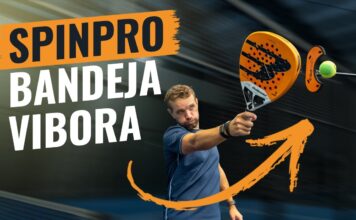
The vibora remains one of padel’s most rewarding yet demanding overheads. Rather than relying on sheer muscle, an effective shot depends heavily on body positioning, contact precision, and the ability to swing without stiffness. During an instructional breakdown on The Padel School, coaches Sandy and Tom discussed how players can develop a stroke that stays low off the glass while overcoming the mechanical and psychological barriers common across recreational ranks.
Tactically, the vibora is frequently utilized by right-handed players operating on the left side of the court, particularly when dealing with an overhead on a slightly shorter lob. Because the ball is not short enough to smash completely out of the court nor deep enough to require a purely defensive bandeja, it presents an aggressive opening. The primary tactical aim is often directing the ball cross-court toward the double glass, enabling the attacking pair to maintain net control while challenging the opponents’ defensive reflexes.
However, players who try to force points with extra pace often run into trouble. Sandy noted that when competitors encounter stronger defensive opposition, the mindset can mistakenly drift toward overhitting: “Right, I’m going to hit my víbora harder and harder.” Rather than relying strictly on speed, the shot thrives on heavy sidespin and court placement, especially as players advance from recreational brackets toward higher levels where defenders routinely handle hard balls off the glass.
Footwork and throwing mechanics
Preparation begins well before racket impact. Executing the vibora requires quick movement to ensure proper spacing to the side of the ball, allowing a full, fluid swing at roughly forehead height. Poor footwork often leads players to contact the ball late or directly overhead, producing high bounces off the rebound or driving the ball straight into the back glass.
Unlike the bandeja—which behaves more like an extended, descending volley—the vibora relies on a linear, horizontal swing path similar to a throwing action. The preparation involves keeping the elbow raised, bringing the racket across near the back of the head before extending horizontally through the contact zone. The movement can be compared to axe throwing, skipping stones, or whipping a towel, requiring an uninhibited release of the hand and wrist.
Tom underscored that stiffness undermines this fluid action, noting that “you need to play this shot freely” and that “you just can’t play that shot with with any kind of tension.” If a player enters the stroke with hesitation, the arm tightens, destroying the natural whipping extension required to impart heavy sidespin.
Overcoming the pressure of match play
A primary hurdle for amateur players is attempting to implement technique directly into social games without sufficient foundation. In competitive or casual play, missing an opening overhead frequently triggers a retreat into passive habits, such as simply pushing bandejas out of fear of making errors.
Professional players maintain their confidence through thousands of repetitions that render the biomechanics second nature. Recreational players can develop similar security by taking drills off the match court. Shadow swings, solo drills with a ball and racket, and focused feeding sessions allow the movement pattern to become automatic before players face competitive situations, ensuring the mechanics do not collapse under pressure.